

Once in a decade a WWE Superstar comes along and changes the game. CM Punk’s secret is that he isn’t a character, he is who he is—and he’s badass. See for yourself, below, and compare during WrestleMania XXVIII this month.
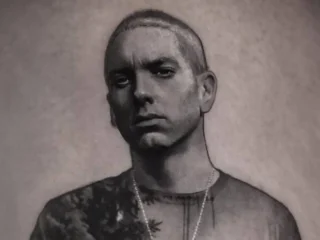
Few lifestyles seem more at odds than pro wrestling and straight edge punk. The success of WWE relies on its ability to tell over-the-top stories involving larger-than-life Superstars to millions watching on TV or in packed arenas. Excess is the key to the WWE image: enormous egos, huge physiques, gigantic spectacles. The straight edge movement is more defined by substance than style, outspoken but less brash (unless the target is Chris Brown). Straight edge finds its home at all-ages basement punk shows free of alcohol and drugs. Serving as a bridge between these two divergent worlds, we find WWE champion CM Punk.
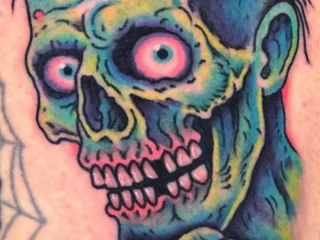
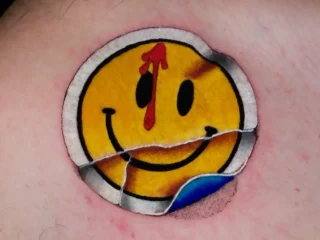
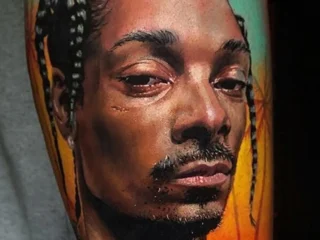
Since arriving in the WWE in 2005, Punk has introduced a whole legion of WWE fans to straight edge and punk rock while also converting some young punks to fans of combat sport. He also has eccentric ink, from a large Pepsi logo to a slice of deep-dish pizza. If you disapprove of his tattoos, Punk doesn’t care: “These are all things that make me who I am. So, yeah, you’re damn right I ink them on my body and I want them to be with me for the rest of my life.” Many would try to conform to one lifestyle or the other—not Punk. He has always found himself out of step with the world, and he wouldn’t have it any other way.
INKED: After you first won the champion title at Money in the Bank and “quit” the WWE, you took the story line beyond Monday Night Raw and other WWE events by posting pictures of the belt in your fridge on Twitter and by showing up at Comic Con. What made you want to use alternate media to move the story line forward?
CM Punk: Pure boredom. That and my belief that I have my fingers on the pulse of what our audience wants way more than management. I think that it’s important for me and for any other Superstar that works for the company to be in the public eye, to be out there, to be considered celebrities. TMZ sees me on the street now and they want to ask stupid questions like they would with some phony like Tom Cruise. We’re on television and we seem to have this one niche audience, and I want to expand way beyond that.
Leading up to your championship you were portrayed as an outsider and an underdog. You’ve talked about how you weren’t marketed correctly or enough. Now that you have been crowned champion, can you still make that claim?
Not without adding some sort of severe backlash from people. It’s hard to say you’re an underdog when you’re the champ. There are still people who are crossing their fingers waiting to see me fail. This industry has always been about image, and I don’t fit that image. I’m the one standing up and saying, “So what?” I’m the best wrestler in the world, and that is what this is about. Who cares if I don’t look like you want me to? That’s something I’ve been dealing with my entire life.
Your wrestling persona doesn’t seem to differ too much from your actual personality.
I don’t really have a different persona. Now, I don’t walk around the street and kick people in the face to solve my problems, obviously—I would be in jail. [Laughs.] There is really no other difference between inside and outside of the ring.
Was this a conscious decision? We ask because some of your earlier WWE story lines almost seemed to mock the straight edge lifestyle.
That was an extreme interpretation of the idea of straight edge. I’m not preachy like that when I’m in my jeans and my hoodie. I’m straight edge for me. That’s one thing about the business that I’m in: It’s my job to twist and bend reality to meet my needs. It was fun to get people pissed at me because the straight edge thing always draws a line in the sand.
Have you always been straight edge?
I never really fit in anywhere. When I read about Ian MacKaye, Minor Threat, and straight edge I thought, Oh, there’s a label for what I am—cool.
It would be safe to say that the first time your average wrestling fan was introduced to straight edge was through you. How do you feel about this?
It’s kind of a when-worlds-collide situation. I’ve always been the punk rock kid who grew up listening to the Clash and the Ramones. Straight edge has always been associated with the hardcore scene—with music—so for it to be associated with combat sports all of a sudden is a little bit of a culture shock. Some people can’t handle it. For me, the bottom line is that no matter who you are or where you come from, just be yourself. The message is positive and I don’t force it on anybody. If one kid can take away anything positive from that, I think it’s awesome.
What bands got you into punk?
I think everybody had to like Naked Raygun, which was a rite of passage. I was a big Slapstick fan; I thought those guys were awesome. Obviously, later on, all the members of Slapstick were in various bands like Alkaline Trio and the Lawrence Arms. I’m drawing a blank on any others—I do get hit in the head for a living, so my memory is not the best.
Who does your tattoo work?
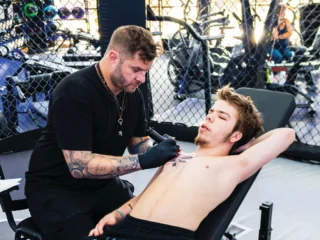
I’m fortunate enough to have parlayed what celebrity I have into the opportunity to get tattooed by great artists. I had Dan Smith draw me up some stuff to work with him out in L.A. Recently I had Luke Westman, a friend of mine, tattoo me. So I get to bounce around now. For me the meaning is still there, but when you’re as tattooed as I am it ends up being:
“What are you doing?”
“Nothing.”
“Luke is around—wanna go get tattoos?”
“Oh, yeah, great.”
So I wound up getting a lot of—I guess there’s no other way to describe them, but—bro tattoos. My friends and I all have a lot of the same tattoos.