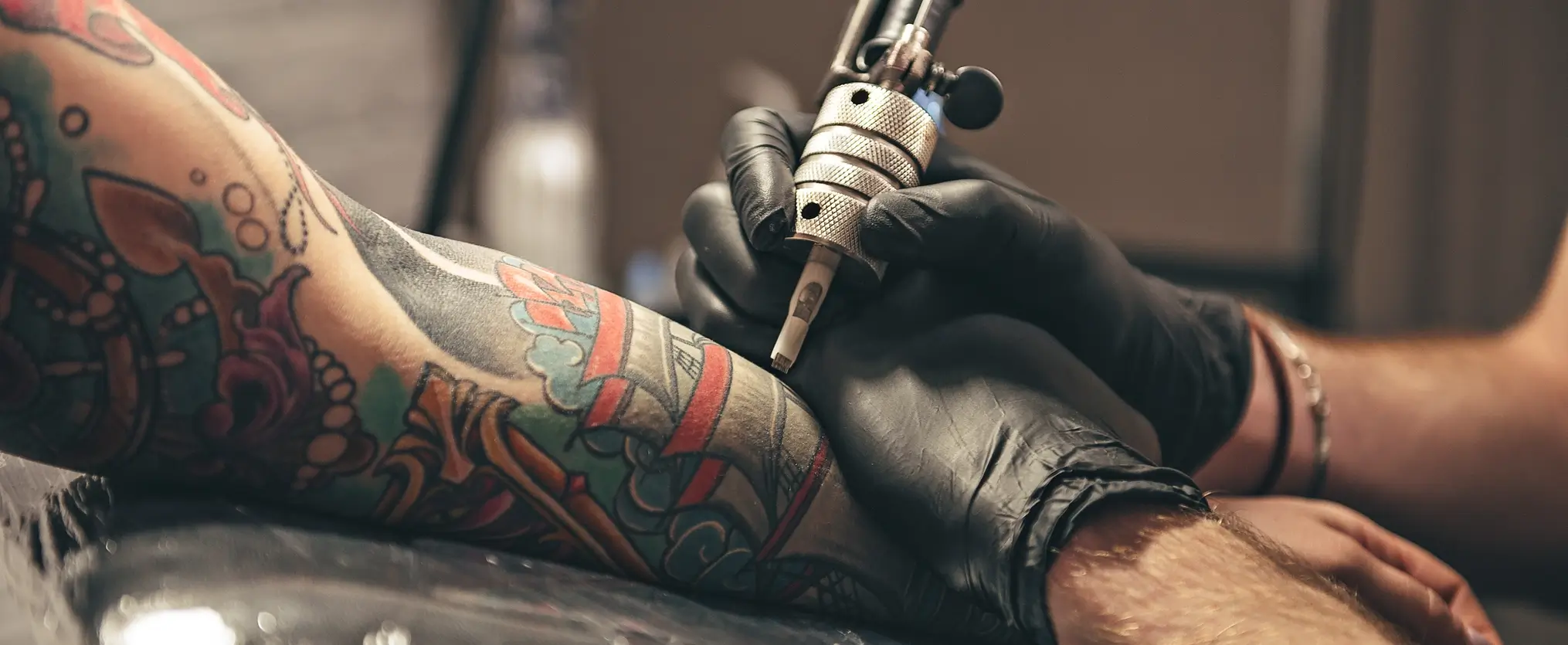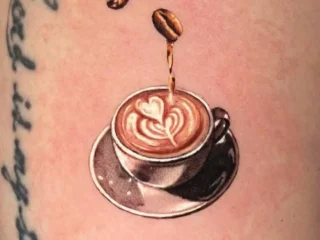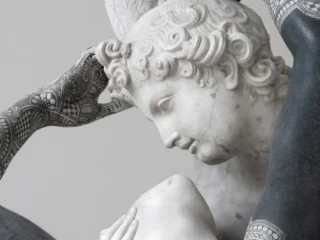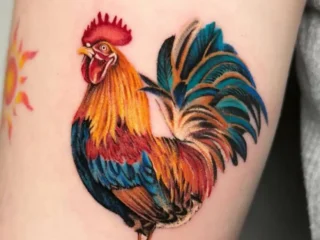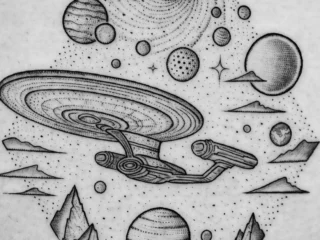
Mike Rubendall is the tattoo artist’s tattooer. More than half of his clientele are fellow artists from all over the world who come to “Rube” for his contemporary approach to traditional Japanese tattoo style. Each client, tattooer or not, receives a meticulously researched, dynamic work of art, and that’s why they’ve been making the trip out to Kings Avenue Tattoo in Massapequa, Long Island, NY, where Rubendall was born and raised. Now the tattoo commute has gotten much shorter, with the opening of a new Kings Avenue on The Bowery, once the gritty center of New York City’s tattoo scene. In this interview, Mike talks about the new shop, his grueling start in the business, and what it’s like to tattoo a dead body.
INKED: How did Kings Avenue Tattoo on the Bowery come to be?
Mike Rubendall: It’s something I’ve always dreamed of and wanted to do, to be in Manhattan. I felt that we missed out on a lot of opportunities being outside of the energy of the art world and tattooing in NYC. I’ve never been a fan of opening multiple shops, but Grez, who’s leading the [Bowery] shop, was pushing for it. He kept saying: “C’mon, let’s do it. There are a lot of great things going on now in Brooklyn and Manhattan, and we should be a part of it.” He kind of talked me into it, and I couldn’t do it without him. We opened in April, and he’s basically running the show there, while I come in part-time because I have to be in Massapequa; that’s my home and that shop needs more attention now that Grez is gone. We luckily hired a lot of new talent, and I feel like this is a new era for Kings Avenue. I think that all of us collectively—with our peers and friends in Manhattan and Brooklyn—could help redefine New York tattooing.
What do you mean by “redefine New York tattooing”?
There’s a lot of good art and ideas going on now that might be overlooked, and I think we might be able to fill the void and be the missing link to bring everyone together—to make it kind of like what San Francisco was back in the day with [Ed Hardy’s] Tattoo City and [Eddy Deutsche’s] 222 Tattoo—and have New York be one of the meccas of tattooing again. I feel like some of the magic has been lost—maybe not “lost,” but overlooked.
The Bowery was once the heart of tattooing in New York City. Do you ever feel the ghosts of tattooists past there?
That’s why we liked the whole idea of being on The Bowery. Our forefathers have done so much there. They lived and died on The Bowery. Hopefully we can resurrect it, make it more exciting again.
You talked about the magic of tattooing. What is that magic for you?
That’s a good question. I always felt that tattooing had a magic lure for me but I could never put my finger on it. I guess it was the rough-and-tumbleness, the whole mystique. When I got into it in 1995, it was more or less a closed trade and any information you got, you got on your own. There was no internet; there were only a few magazines. You really had to dig for tips and tricks, and good types of inks, needles, and machines. It was fun. It was special. Nowadays, it’s easily accessible via media, internet, different supply companies, and television. Even though television made it more accepted and has done some good, it kind of killed the whole mystique of tattooing. It lost its edge. So I’m thankful that I grew up in it during a time when it was still kind of shady and interesting.
When did you get started in the business?
I was 17 when I started. I apprenticed under Frank Romano [owner of Da Vinci Tattoo Studio] for a year and a half and then continued to tattoo there for about 10 years before I opened up Kings Avenue in 2005.