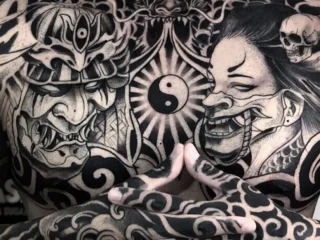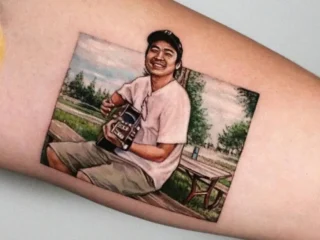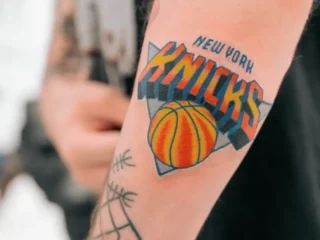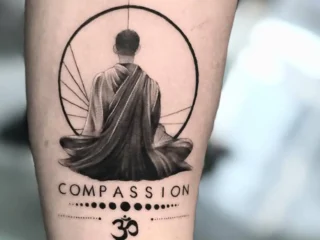





Mixed martial arts has become the defining sport of the 21st century, and with it comes a new style of fighter—smart, athletic, and more often than not, covered in ink. Here, a look behind the scenes of the sports’ largest promotion, the Ultimate Fighting Championship.
Punching someone in the face just doesn’t cut it anymore. Where boxers only use their fists, the dominant fighters of the 21st century also kick, knee, trip, and wrestle—anything legal to secure victory. Mixed mar tial arts and its most popular promotion, the Ultimate Fighting Championship, are undergoing a furious ascent into the mainstream. The gloves are smaller, and the action is faster and harder-hitting, but beneath the brutal veneer, the sport, its fighters (and their tattoos) are surprisingly complex.
The UFC came into being in the early ’90s as a way to answer the ques tions that had been percolating ever since the American public became aware of Bruce Lee and martial arts: “Can a boxer beat a karate master?” “Can wrestling beat judo?” The early events were bloody, brutal affairs, often with one of the two fighters so overmatched it was difficult to watch. In re sponse to political and economic pressures, however, the sport has evolved into a legitimate affair, with gloves, weight classes, sanctioning by state ath letic boards, and—most importantly—well-matched combatants who train in all fighting styles instead of just one.
In the past few years, the sport’s popularity has exploded. Partially driv en by the Spike TV reality show The Ultimate Fighter, which matches up young fighters trying to win a UFC contract, and is watched by millions of viewers per episode, the UFC earned more pay-per-view money than box ing in 2006. Measured by online interest, the UFC is now the sixth most popular professional sports league in the United States, ahead of both the PGAand Major League Soccer, and nipping at the NHL’s heels.
This actually makes a lot of sense, as mixed martial arts is the logical fighting sport for the 21st century. Its creation is both a product and case study of globalization, as once isolated and tradition-bound martial arts dis ciplines have been forced to evolve in response to international challenges. Boxing is a struggle between two athletes that is in the end symbolic, given the sport’s restrictive rules. And it fit well in the culture of social restraint that dominated the first half of the 20th century. But in this century, as models and celebrities show more and more skin, and entertainment is con strained by fewer and fewer boundaries, our desire to see two men in a private war is no longer satisfied by a sport where only two of the body’s numerous natural weapons can be used—and those even covered in pillow-like gloves. Boxing may symbolize a real fight, but mixed martial arts is a real fight. And modern culture no longer accepts substitutes. The personalities in this new sport are surprisingly diverse. Where once they might have been all white wrestlers from the
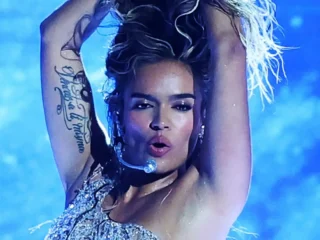
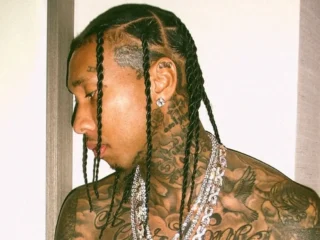
Midwest, now fighters are emerging from the inner city, college campuses, and all races and classes. And while mixed martial arts may seem mindless and brutal to some, in reality it’s a subtle, technical sport that attracts smart, thoughtful combatants—who happen to be covered in ink. Though fighters rarely let down their guard, their tattoos—as seen in the following portraits taken at the UFC 79: Nemesis event held in Las Vegas—show what’s really under their skin.