

archives
A, B, C, D, E, F, G, H, I, J, K, L, M, N, O, P, Q, R, S, T, U, V, W, X, Y, Z, 0, 1, 2, 3, 4, 5, 6, 7, 8, 9

Credit: Charlie Connell (writer),   Sarah Lim (photographer)  

Austin Tattoo Company
5241 North Lamar Blvd.
Austin, TX
512-380-0730

Taylor Street Tattoo
1150 W. Taylor St.
Chicago, IL
312-455-8288
twitter.com/underwoodtattoo

For centuries people have said that idle hands are the devil’s workshop, meaning that when people are left with nothing to do they turn to vice. When the phrase was coined in medieval England, no one imagined that tattooing could be the virtue in such a situation, but that is the case in the life of Keith Underwood. After the passing of his friend and mentor Mike “Rollo Banks” Malone, Underwood fell into a deep addiction and has come out of it realizing that he needs to stay busy to escape those demons. “The worst thing to happen to me was to have my friend die, get a bunch of money I didn’t earn, and develop a drug problem with no job and nothing to do,” Underwood explains. “The best thing is for me to stay busy.”

Luckily, staying busy is rarely a problem for him. Whether he’s running two tattoo shops 1,200 miles apart (in Chicago and Austin), designing tattoo machines, navigating legal loopholes, running a record label, or hitting the road to tattoo for the Vans Warped Tour, Underwood has kept himself damn busy over the years.

INKED: What made you become a tattoo artist?
Keith Underwood: Dropping out of high school would be the main thing. I started getting tattooed really young, probably too young, 15. I didn’t have a whole lot else to do so I started hanging out at shops and one thing led to another. Eventually I was told, “If you’re going to be here you may as well clean up.”

So you worked your way up from there? This was around 1994 and body piercing had just started coming around to tattoo shops; people were calling the shop asking about piercings all day long. I’m not really sure why they connected tattoos and body piercing, but they did. They asked me if I wanted to give that a try, so I did. I didn’t have any training but I started piercing people when I was still a teenager. That led to a tattoo apprenticeship. The piercing allowed me to be in the shop and to make money, so it was a good thing.

Did you see yourself becoming an artist before tattooing? I liked art but I wasn’t much of a student in any way, shape, or form. I didn’t take a bunch of art classes or anything. Most of what I know about art is directly from tattooing. The only mediums I really work in are tattoos and watercolor painting for flash. I’ve never done any oil painting in my life. It’s always been tattoo-oriented.

Was it the tattooing that got you interested as opposed to using tattooing as a medium for something you were already into? I have always had a good relationship with the older generation of tattooers. From what they’ve told me, the reason they like me is that I remind them more of the traditional way of getting into tattooing. I was just a criminal kid, a hustler. As opposed to coming from the background of being a fine artist with a degree—that’s not where I come from. There’s no real prima donna about me and my artistic skill. It’s like what Cliff Raven once said: “I’m a craftsman trying to be an artist.” I believe that tattooing is for the masses. It’s for the guy that wants to get his sweetheart’s name on him, pick it out off the wall, and get out the door. I’m not really big on building big ego monuments to myself and how cool I am. I don’t push my ego onto my customers.

When starting, was it difficult to wrap your head around the idea that you were working in a medium that was permanent on someone’s body? I think that I was young enough I didn’t think about it. I was tattooing professionally by the time I was 19. I got the weight of what I was doing but I was trained really well. My initial apprenticeship was with Denise Wolf in Libertyville, IL, right outside the naval base. She gave me a very traditional apprenticeship. I didn’t tattoo for a year and a half. I watched every tattoo and made all my mistakes on paper before a stencil was ever made. I’m not saying I haven’t messed things up. Of course I’ve screwed up, misspelled things, and done all kinds of crazy shit—I’m human. I really think that being a cocksure teenager made it so the idea of failing never got in my head. I knew that this was for me.

It seems that becoming a tattoo artist was a natural fit, then. People always ask, “What would you be if you weren’t a tattooer?” Well, what I did before tattooing was stealing cars and selling drugs. It’s always been about the hustle, that’s why I like the street shop thing. Later in my career I made a tattoo machine. I have a U.S. patent in tattooing. I own part of a coloring company. I wanted to do it all and know it all. When I went to work for Mike “Rollo Banks” Malone—which I consider my second apprenticeship—he made me look at the tattoo world as more than just doing tattoos. Making flash, selling flash, making machines, mixing ink, and selling it all really related to what I learned as a kid. Taking a product at one price, changing it, and reselling it at 400 times the price—it worked well for me.

Were you able to recognize what your strengths and weaknesses were for the whole business of tattooing, not just the art? I think where I have excelled is that I know exactly how good I am not at tattooing. Where I have excelled is in machine making and the other aspects of tattooing. And I found a niche style of tattooing that worked really well for me, really traditional American tattooing. Emulating what I consider to be the masters of tattooing, those artists from the early 1930s and 1940s.

You mentioned that you have a patent on a tattoo machine. How exactly did that come about? The patent is in improvements to tattoo technology; it’s a pretty broad term. It mostly deals with wireless technology. I built a prototype with a power source and power regulator all within the machine. I worked with a radio control for the foot switch so that there were absolutely no wires. I had never seen anything like that before. I went to Radio Shack and bought a bunch of components and just started fucking around.

Was it difficult to obtain the patent? There’s a reason that people don’t get patented. It took three years of my life and a huge amount of lawyer fees and I really haven’t made anything off of it yet. I worked with Lucky Supply and we tried to develop a working model. We didn’t want to put out something too early and have it be flawed. We worked for a while and were really limited by battery technology; it wound up being too big and too bulky. You can get a patent for anything whether it is practical or not at the time, so that’s what I did. The whole time it was so scary because you spend all this money on the application process with no guarantee that you will even get the patent. Then the patent examiner’s whole fucking job is to figure out why your patent is not patentable, so it’s a very stressful ordeal. I was thrilled to physically have a patent in tattooing because there aren’t many.

Some of my heroes in tattooing, Percy Waters and Samuel O’Reilly, are patent holders from way back, the first in 1891. I love to be a part of that lineage.


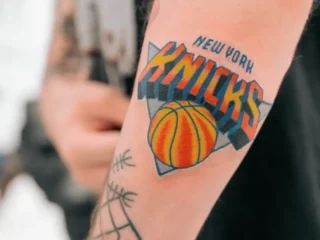
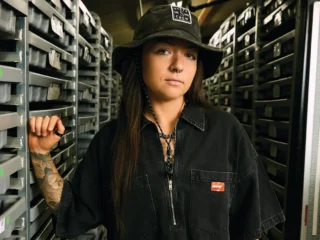
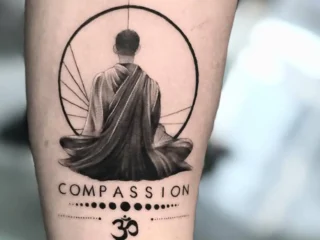
Related Gallery :: Click on thumbnail to embiggen

Underwood 1 Underwood 2 Underwood 3 Underwood 4 Underwood 5 Underwood 6